 Indonesian
  English
  French
  Arabic
  Spanish (Chile)
  Portuguese
  Spanish (Mexico)
  German
  Vietnamese
1. Pendahuluan
When it comes to electrical projects, choosing the right conduit is a little like picking the right foundation for a house—get it right, and everything else falls into place; get it wrong, and you’re setting yourself up for headaches down the road.
Among the many conduit options out there, Schedule 40 PVC conduit has quietly earned a reputation as the “go-to” choice for countless electricians, contractors, and even homeowners tackling their own wiring jobs.
Why? Because real-world projects rarely unfold under perfect conditions. Think about it: moisture creeping in from the ground, metal rusting after a few rainy seasons, or installation costs climbing higher than expected.
On top of that, wires don’t always run in neat, straight lines—sometimes they need to bend, twist, or detour around unexpected obstacles. These are the everyday challenges that make conduit selection more than just a box to check on a materials list.
And this is where Schedule 40 PVC conduit steps in. Lightweight yet durable, non-conductive yet tough enough for underground runs, it strikes a balance that feels almost tailor-made for practical wiring solutions.
In this post, we’ll take a closer look at the common challenges people face in electrical installations, show you how Schedule 40 PVC conduit addresses them, and highlight where it shines best.
By the end, you’ll see why it’s not just another conduit—it’s often the most reliable partner in keeping wiring safe, affordable, and code-compliant.
2. Common Electrical Wiring Challenges
When we look at electrical installations in the real world, it becomes clear that theory and practice rarely align perfectly. Drawings may depict straight, clean lines, but actual projects often face environmental stress, material limitations, safety concerns, and cost pressures. Let’s break down the most common challenges that electricians, contractors, and project managers encounter on a daily basis.
🌧️ Corrosion and Environmental Exposure
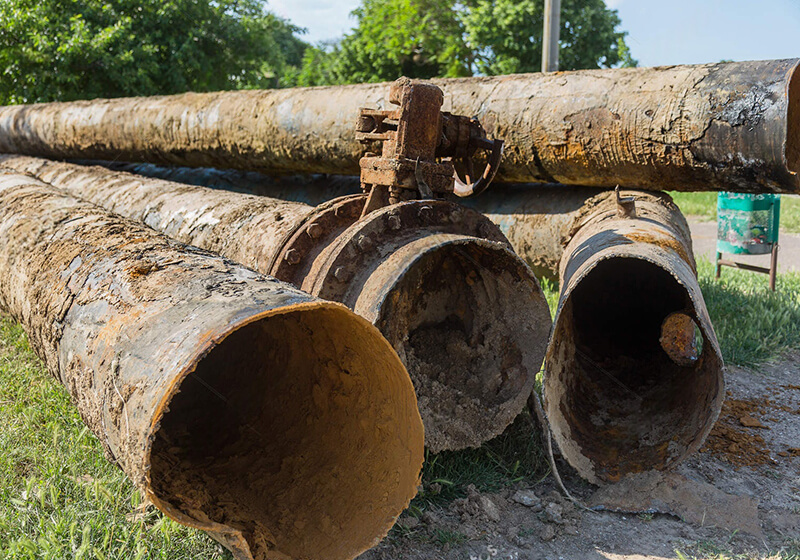
One of the most significant risks to electrical conduit systems is corrosion. Metallic conduits, particularly steel, are vulnerable to electrochemical reactions when exposed to moisture, salts, or acidic soils. Over time, this leads to rust formation and structural weakening.
In underground installations, soil composition and groundwater accelerate corrosion.
In coastal regions, salt-laden air rapidly deteriorates metal surfaces.
In industrial environments, chemical vapors can shorten the lifespan of conduit systems.
The result is not only material degradation but also compromised electrical protection, leading to increased maintenance and potential system failures.
💰 High Installation Costs and Labor Intensity
Conduit installation is resource-heavy, and with metallic options, labor often outweighs material costs. Cutting, threading, and bending metal requires specialized equipment and skilled labor.
Studies have shown that labor accounts for 60% or more of total conduit system costs.
Each bend or adjustment adds hours of work, particularly in complex layouts.
Additional costs come from transporting and handling the heavier material.
This cost burden makes project budgeting more difficult, especially when deadlines are tight or when contractors must manage multiple trades simultaneously.
⚡ Safety Concerns and Electrical Conductivity
Safety remains a top priority in any electrical installation. Metallic conduits, while strong, are conductive. If insulation fails or a conductor is damaged, the conduit itself may become energized.
This creates a potential shock hazard for workers and occupants.
NEC and CSA standards require grounding and bonding of metal conduits, adding complexity.
Grounding systems, while effective, require meticulous design, testing, and maintenance.
In practice, this means higher upfront costs, more rigorous inspection, and ongoing vigilance throughout the lifecycle of the installation.
🏗️ Installation Flexibility and Layout Constraints
Conduit rarely runs in a straight line from point A to point B. Buildings, walls, and structural systems demand detours, offsets, and custom routing.
Metallic conduits are rigid, making them difficult to bend without heavy tools.
Every change in direction often requires additional fittings such as elbows and couplings.
On-site adjustments consume valuable time and slow overall project progress.
In environments where rapid changes are needed—such as commercial renovations or industrial retrofits—the lack of flexibility becomes a bottleneck.
📜 Regulatory and Application Limitations
Conduit use is governed by strict standards such as the National Electrical Code (NEC) in the U.S. and CSA C22.2 in Canada. Not all conduit types are universally approved for every application.
Direct burial of metallic conduit is restricted in many cases unless protective coatings are used.
In corrosive environments, additional safeguards must be added to comply with code.
Regulatory differences between jurisdictions increase complexity for contractors working across regions.
These limitations create planning challenges, requiring careful selection of conduit materials that can balance performance, compliance, and cost.
3. How Schedule 40 PVC Conduit Solves These Problems
Electrical projects succeed when materials are matched to real-world demands. While the previous section highlighted challenges that often complicate installations, Schedule 40 PVC conduit addresses these issues with a combination of durability, safety, and compliance. Let’s examine how its characteristics directly support modern electrical systems.

🛡️ Long-Term Resistance to Environmental Stress
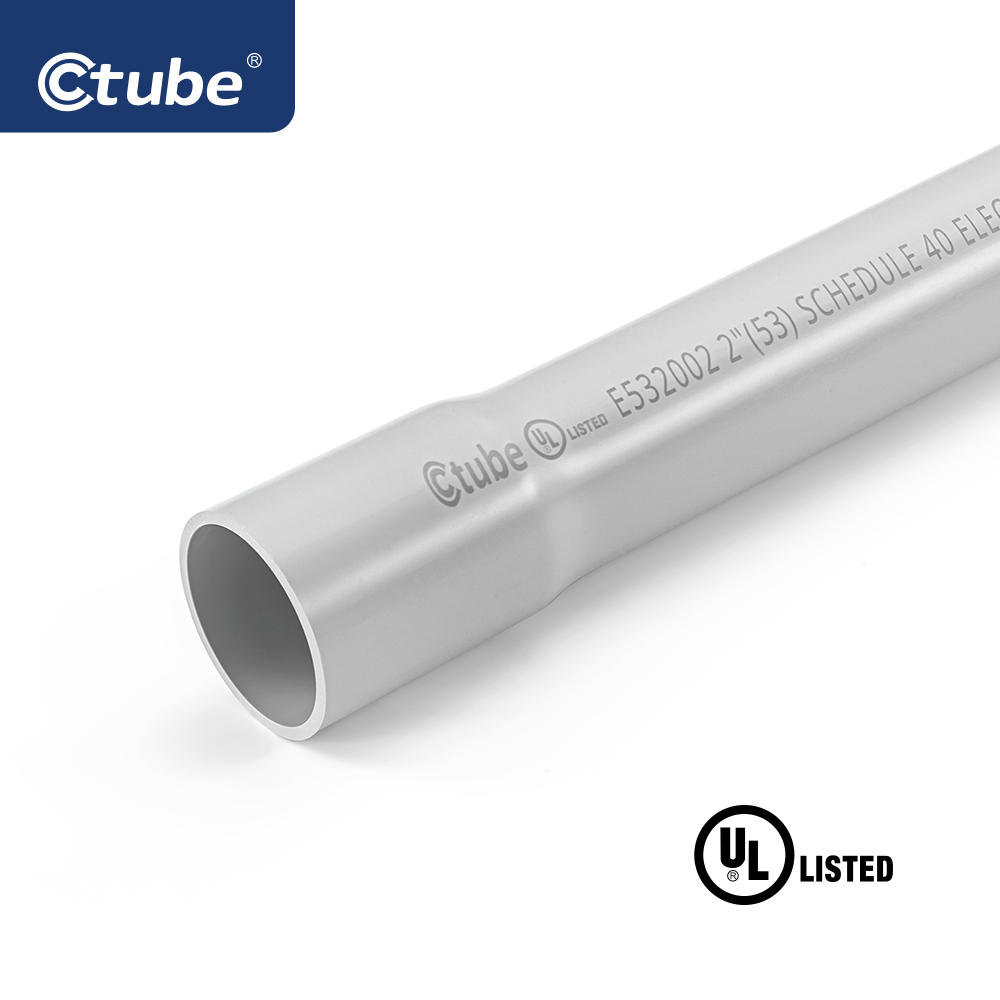
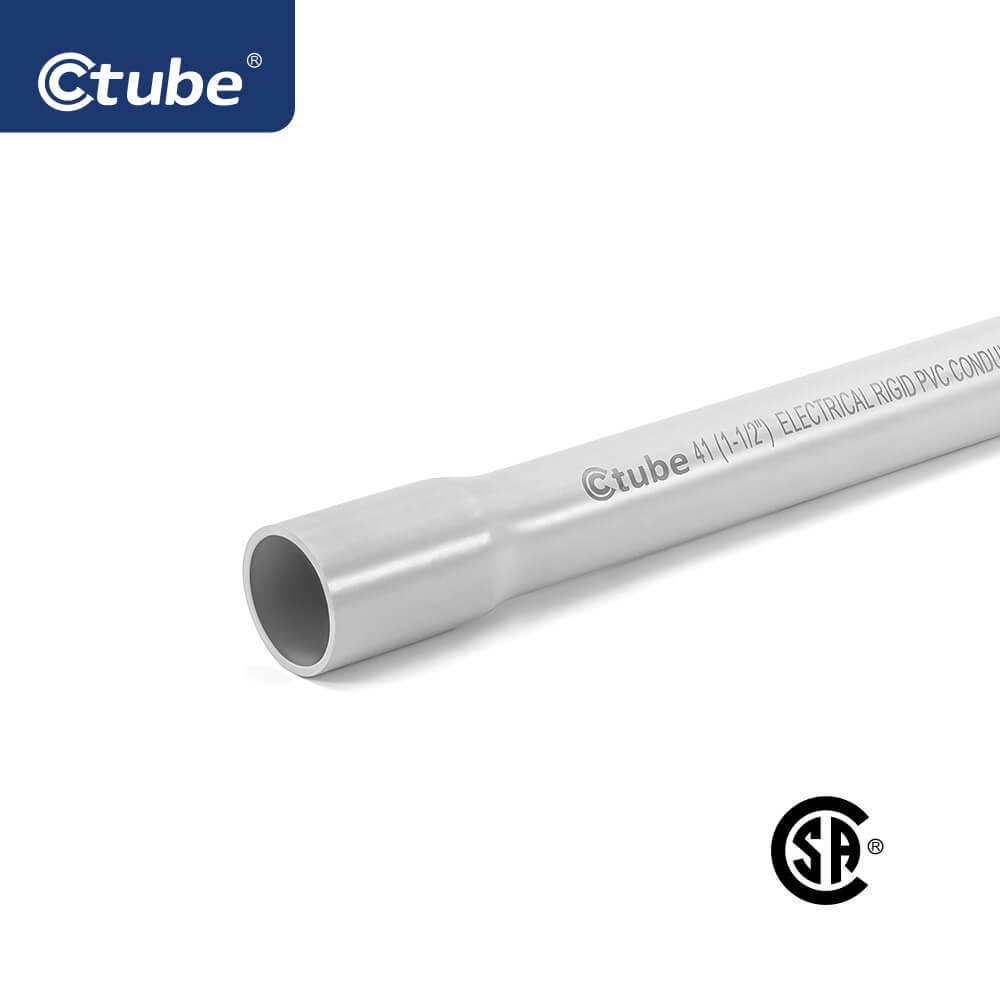
Schedule 40 PVC conduit is manufactured from polyvinyl chloride, a material inherently resistant to moisture, salt, and soil chemicals. Unlike metallic conduits, it will not rust, pit, or degrade when buried underground or exposed to coastal climates.
• Approved by NEC Article 352 and CSA C22.2 standards for direct burial and concrete encasement.
• Maintains structural integrity even in wet locations or chemically aggressive environments.
• Reduces long-term maintenance cycles and unexpected replacement costs.
This resilience makes it particularly valuable for underground utility runs, coastal developments, and wastewater facilities where corrosion is a constant concern.
⏱️ Lower Installation Costs and Faster Workflows
One of PVC’s greatest advantages is its lightweight construction. A single installer can carry and position multiple lengths without additional equipment.
• Cuts easily with hand tools (no threading or power saws required).
• Joins quickly using solvent cement, creating permanent, watertight connections.
• Heat-bending techniques allow smooth curves with fewer fittings.
According to construction case studies, PVC conduit systems can reduce installation time by up to 50% compared to traditional metallic systems. This efficiency translates directly into labor savings and accelerated project timelines.
🧯 Enhanced Electrical Safety
PVC’s non-conductive nature eliminates one of the most significant hazards associated with metallic conduits.
• No risk of the conduit body carrying fault current.
• In many cases, grounding is not required, simplifying design.
• The material’s high dielectric strength ensures reliable insulation around wiring.
For environments where electrical faults carry higher consequences—such as schools, healthcare facilities, or residential projects—this characteristic provides both peace of mind and code compliance.
🔄 Installation Flexibility and Adaptability
Projects often require adjustments in the field, and PVC adapts far more readily than metallic alternatives.
• Can be bent into customized sweeps with controlled heating.
• Requires fewer elbows, couplings, and fittings, simplifying material lists.
• Facilitates smoother wire pulls by reducing sharp directional changes.
This flexibility is particularly advantageous in retrofit projects, complex commercial layouts, and underground routing around obstacles, where changes are frequent and efficiency is key.
🌍 Broad Code Recognition and Versatile Applications
Schedule 40 PVC conduit is widely accepted by NEC in the U.S. and CSA C22.2 in Canada, making it suitable across jurisdictions.
• Approved for direct burial, encasement in concrete, aboveground exposure, and wet locations.
• Compatible with a wide range of fittings and accessories for residential, commercial, and industrial use.
• Frequently specified in renewable energy projects, utility expansions, and residential developments due to its balance of strength and cost-effectiveness.
This regulatory acceptance means contractors can confidently specify PVC conduit across multiple project types without facing compliance conflicts.
4. Practical Applications of Schedule 40 PVC Conduit
The true measure of a conduit system lies not only in its technical specifications but in how it performs across diverse real-world environments. Schedule 40 PVC conduit has proven to be a versatile solution across residential, commercial, and industrial sectors. Let’s explore some of the most common applications where its strengths are put to work.
5. Conclusion
Choosing the right conduit is never a trivial decision—it determines not only the safety of an electrical system but also its long-term performance and reliability. In this article, we’ve explored how Saluran PVC Schedule 40 stands out as a practical solution to common challenges in electrical installations, from corrosion resistance to cost efficiency, safety assurance, and broad code compliance.
Think of conduit as the backbone of your wiring system. Schedule 40 PVC offers the resilience and adaptability that modern projects demand, whether in residential, commercial, or industrial environments. Its balance of strength, affordability, and ease of installation makes it more than just a product—it’s an investment in lasting performance.
✨ We sincerely hope this article has been helpful in guiding your selection process. Wishing you success with your projects, wherever they take you.
📖 If you’d like to dive deeper into specifications, applications, and standards, don’t miss our detailed guide: “Schedule 40 PVC Conduit, Everything You Need to Know.”
🏗️ At Ctube, we specialize in manufacturing and supplying premium-quality PVC conduit solutions, including Schedule 40 and Schedule 80, trusted in projects worldwide. Certified to international standards such as UL 651, CSA, and AS/NZS 2053, our products are designed with safety, durability, and cost efficiency in mind. With years of expertise, we are committed to supporting contractors, builders, and engineers with conduit systems they can rely on.
Pertanyaan yang Sering Diajukan (FAQ)
Apakah pipa konduit PVC Schedule 40 dapat digunakan di bawah tanah?
Ya. Pipa PVC Schedule 40 disetujui oleh NEC (Pasal 352) dan CSA C22.2 untuk penguburan langsung dan pembungkus dalam beton. Pipa ini banyak digunakan dalam saluran layanan bawah tanah, jalur utilitas, dan aplikasi di bawah permukaan tanah lainnya karena tahan terhadap kelembaban, korosi, dan bahan kimia tanah.
Apa perbedaan antara pipa PVC Schedule 40 dan Schedule 80?
Perbedaan utamanya terletak pada ketebalan dinding. Pipa PVC Schedule 80 memiliki dinding yang lebih tebal, sehingga lebih kuat dan lebih tahan terhadap benturan mekanis. Namun, keduanya memiliki diameter luar yang sama dan menggunakan fitting yang sama. Schedule 40 biasanya dipilih untuk aplikasi umum, sedangkan Schedule 80 lebih disukai di lingkungan yang membutuhkan perlindungan ekstra.
Apakah pipa konduit PVC Schedule 40 tahan terhadap sinar matahari?
Pipa PVC Schedule 40 standar tahan terhadap sinar UV dan dirancang untuk penggunaan di luar ruangan, tetapi paparan sinar matahari langsung yang berkepanjangan pada akhirnya dapat menyebabkan perubahan warna permukaan. Untuk instalasi di luar ruangan, terutama di daerah dengan paparan UV tinggi, menggunakan pipa yang secara khusus ditandai sebagai "tahan sinar matahari" memastikan kinerja yang lebih tahan lama.